1. What do you do?
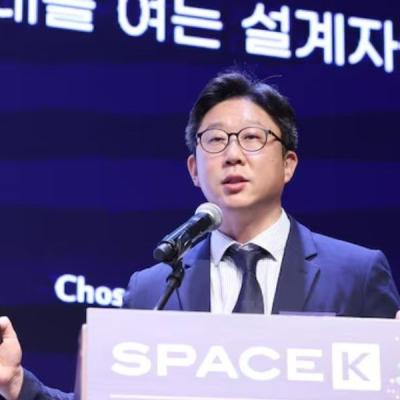
Since earning my Ph.D. from Georgia Tech in 2015, I have been serving as a research fellow at the Science and Technology Policy Institute (STEPI) in Sejong, South Korea. STEPI is a government-funded think tank dedicated to advancing national science and technology policy through research, analysis, and strategic advisory. My work primarily focuses on national space policy, defense R&D policy, and the intersection of science, technology, and society. I contribute to shaping public policy by conducting in-depth research and providing expert consultation to government agencies.
2. What’s the coolest part of your job?
The most rewarding and exciting aspect of my work is contributing directly to the direction and formulation of science and technology policy at the national level. While I engage in academic and theoretical research, much of my work is grounded in practical, policy-oriented activities. What makes this role particularly compelling is the opportunity to interact with experts and decision-makers in the field, analyze current conditions, propose realistic policy alternatives, and receive immediate feedback from the policy landscape.
3. Why are you passionate about it?
Before pursuing my Ph.D. at Georgia Tech, I studied science and technology studies in Korea and worked as a science journalist. I was deeply interested in how scientific and technological knowledge translates into real-world value through institutional and policy mechanisms. Among various fields, space development particularly fascinated me. As an amateur astronomer since childhood, I often wondered how a domain like space exploration — requiring long-term commitment and massive investment — could be justified and realized under the banner of fulfilling humanity’s dreams. In 2006, I applied to become Korea’s first astronaut and was selected as one of the final 30 candidates. That experience transformed my personal curiosity into a broader policy-level question. In many ways, the work I do today is a continuation of that inquiry.
4. Which skills from your IAC degree have helped you be successful in this career?
I completed my Ph.D. at Georgia Tech with a dissertation in the history of science and technology, focusing specifically on the history of space development. Under the rigorous guidance of my advisor, John Krige, I was intensively trained in both the mindset and methodology of historical research. During that time, I conducted archival research on Korea’s space history and developed my own analytical perspective. That foundation has been instrumental in shaping my career and enabling me to contribute meaningfully to Korea’s current space policy.
5. What’s your #1 tip for students and alumni interested in your field?
Stay curious, and don’t be afraid to ask big questions. Whether you're exploring space policy, defense R&D, or the broader relationship between science and society, the most impactful work often begins with a personal fascination — then evolves into a national conversation. Build a strong foundation in both theory and practice: academic rigor will sharpen your perspective, but engaging directly with policymakers, experts, and stakeholders will teach you how ideas become action. If you can bridge those worlds, your career won’t just be meaningful — it’ll help shape the future.
Meet more featured alumni in the School of History and Sociology!